









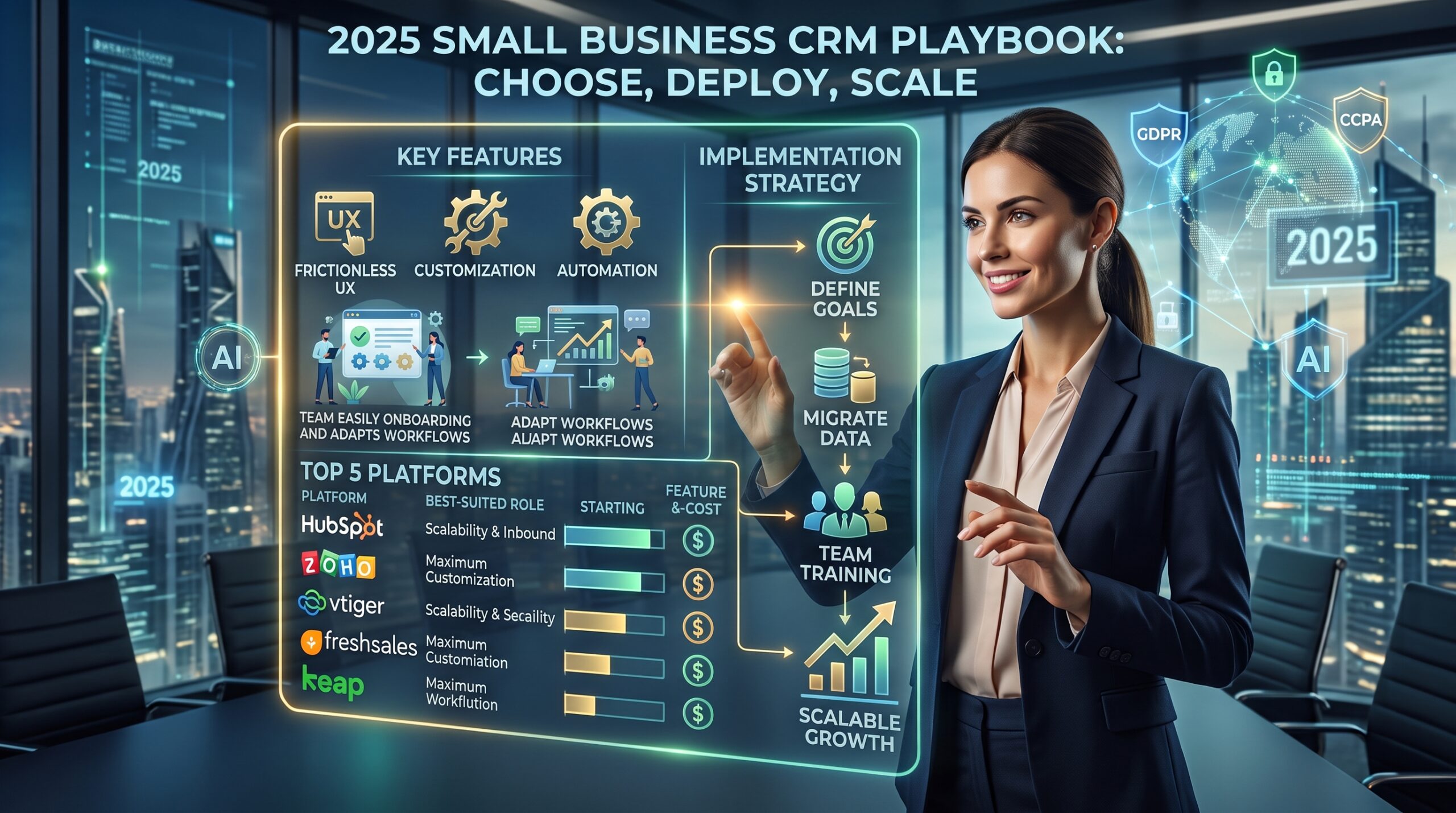
Operating a small business in 2025 requires doing more with less. In a competitive market where customer expectations are higher than ever, managing client communications through messy spreadsheets and scattered email threads is a direct path to lost revenue.
A dedicated Customer Relationship Management (CRM) system serves as the central command center for your company. It automates repetitive administrative tasks, organizes customer interactions, and equips small teams to deliver the personalized experiences typically associated with large enterprises.
Why Small Businesses Need a Modern CRM
Investing in CRM software is about building scalable efficiency. For growing enterprises, the core value proposition includes:
- Centralized Contact Records: Consolidate contact details, purchase histories, and past conversations into a single, accessible database.
- Workflow Automation: Eliminate manual bottlenecks by automating routine tasks like lead assignments, email confirmations, and follow-up alerts.
- Contextual Customer Care: Equip customer-facing employees with real-time client history to resolve support inquiries faster and upsell effectively.
- Actionable Revenue Insights: Track pipeline bottlenecks and sales performance to make confident, data-driven operational decisions.
6 Non-Negotiable Features to Evaluate
When assessing potential platforms, prioritize tools that offer these core capabilities:
- Frictionless User Experience: The software must have an intuitive interface so your team can hit the ground running without weeks of technical onboarding.
- Modular Customization: Look for platforms that let you easily modify data fields, adjust sales pipelines, and create bespoke dashboards.
- Third-Party Interoperability: Ensure the platform connects smoothly with your existing stack, including email providers, billing systems, and marketing apps.
- Full Mobile Functionality: Frontline teams and remote employees need mobile apps that allow them to update records and respond to leads on the move.
- Smart Process Automation: Automated lead scoring, triggered email sequences, and task creation save valuable hours every week.
- Granular Reporting: Look for visual, automated reporting that clearly highlights key sales metrics, pipeline velocity, and conversion rates.
Top 5 Small Business CRM Platforms for 2025
| CRM Platform | Best Suited For | Standout Features | Starting Price Range |
| HubSpot CRM | Inbound Marketing & Scalability | Robust free features, seamless email tracking, deep marketing hub integration | Free tier; paid plans from ~$15/user/month |
| Zoho CRM | Maximum Customization & Value | AI assistant (Zia), workflow customization, rich application ecosystem | Free for up to 3 users; paid tiers from ~$14/user/month |
| Vtiger | All-in-One Operations | Unified sales, marketing, and support ticketing in one platform | Free for up to 10 users; paid plans from ~$12/user/month |
| Freshsales | Fast-Moving Sales Teams | Built-in telephony and chat, AI-driven predictive lead scoring | Free tier; paid tiers from ~$15/user/month |
| Keap | Solopreneurs & Automation | End-to-end e-commerce, CRM, and automated lead nurturing campaigns | Starts around $79/month for two users |
Step-by-Step CRM Implementation Strategy
Selecting software is only half the battle; executing a structured rollout ensures your team actually adopts it.
Step 1: Define Clear Operational Goals
Outline what specific problems you want the CRM to solve. Are you trying to shorten the sales cycle, reduce response times, or improve lead retention? Concrete KPIs will guide your setup.
Step 2: Clean and Migrate Data
Before importing existing contact lists, remove duplicates, delete stale contacts, and verify email formats. High-quality initial data prevents operational headaches later.
Step 3: Run Interactive Team Training
Resistance to change is the main reason software implementations fail. Host hands-on training sessions that demonstrate how the CRM eliminates daily administrative burdens for your staff.
Step 4: Monitor and Collect Feedback
After launch, track daily usage metrics closely. Solicit regular input from your team regarding workflow friction, and refine pipelines and custom fields accordingly.
Final Thoughts
Selecting the right CRM platform in 2025 comes down to finding the balance between current business needs, team usability, and long-term scalability. By prioritizing systems that offer strong automation, easy integration, and transparent pricing, small businesses can build stronger customer connections and establish a resilient foundation for sustainable revenue growth.