









In today’s hyper-competitive digital marketplace, a Customer Relationship Management (CRM) platform is no longer just an advanced address book—it is a critical engine for driving revenue, streamlining daily operations, and building lasting customer loyalty. However, merely purchasing software isn’t enough. As we move into 2025, business leaders must deeply understand and optimize the Return on Investment (ROI) of their CRM systems to ensure every dollar spent translates into measurable business growth.
Here is a comprehensive look at how to measure, understand, and dramatically maximize your CRM returns in the coming year.
The Fundamentals of CRM ROI
At its core, CRM ROI is a financial metric that compares the profit generated by your CRM system against the total cost of implementing and maintaining it.
Calculating this return is essential for modern businesses for three main reasons:
- Cost Justification: It provides concrete financial proof that the software expenses are paying off.
- Performance Tracking: It reveals whether your sales and customer service teams are actually adopting and benefiting from the platform.
- Strategic Agility: Understanding these metrics allows leadership to make data-backed decisions regarding future marketing and sales initiatives.
The High-Value Benefits of a Optimized CRM
When fully leveraged, a robust CRM ecosystem delivers massive organizational benefits that directly impact the bottom line:
1. Unprecedented Sales Velocity
By automating tedious administrative tasks and tracking sales pipelines in real-time, CRMs allow representatives to focus purely on closing deals. Data suggests that properly implemented CRM systems can drive a 29% increase in overall sales revenue through improved forecasting and streamlined workflows.
2. Marketing Automation and Conversion Spikes
Modern CRMs offer powerful audience segmentation capabilities. When you combine targeted data analytics with automated marketing campaigns, businesses can see lead conversion rates surge by up to 300%. Delivering the right message to the right person at the exact right time becomes effortless.
3. Deep-Level Customer Insights
Centralizing all client communications, purchase histories, and preferences into a single dashboard provides a holistic view of your audience. This enables highly personalized service, which drastically reduces customer churn and boosts lifetime value.
5 Actionable Strategies to Maximize Your Investment
To extract the highest possible ROI from your CRM in 2025, implement these proven strategies:
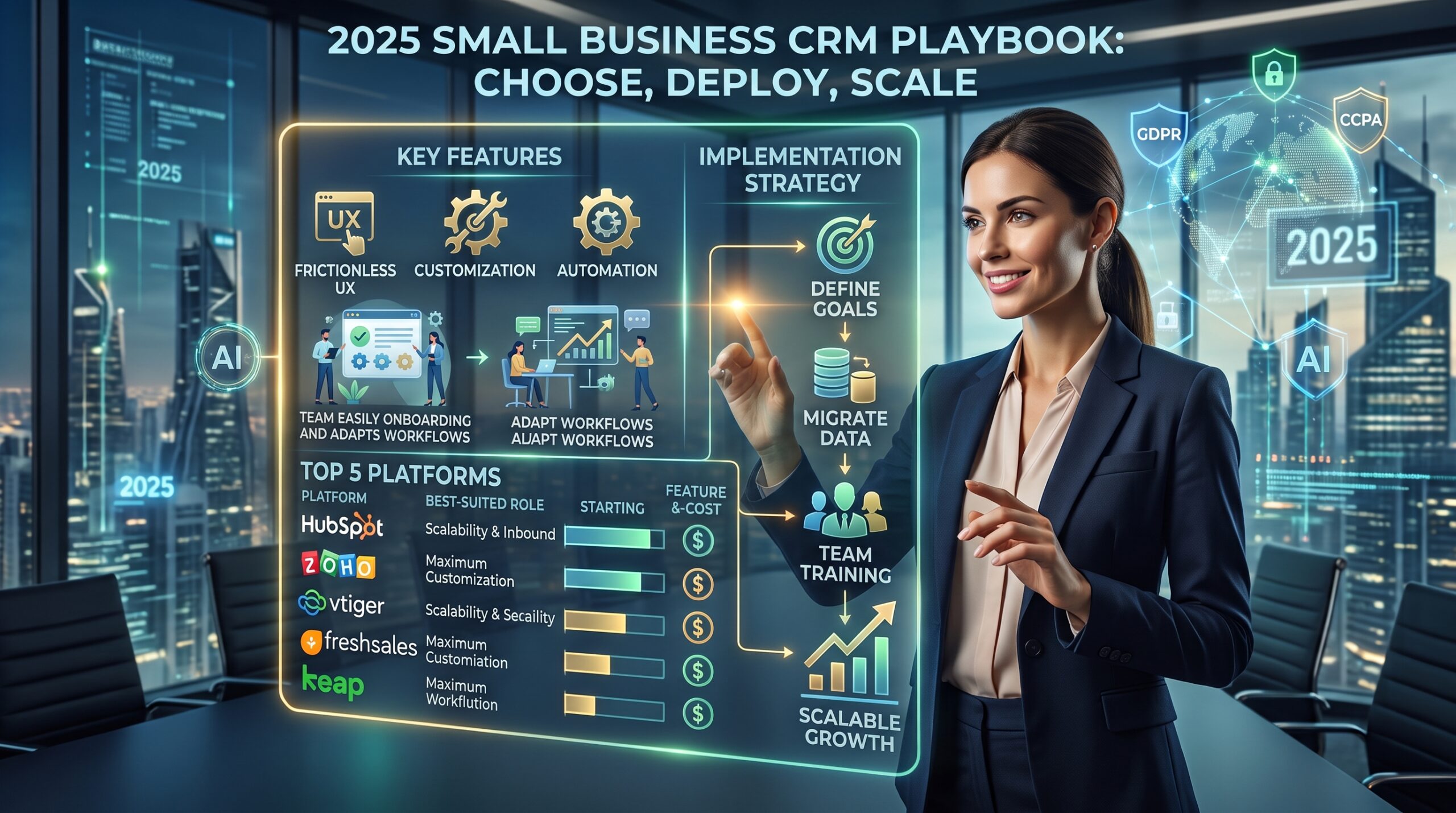
- Prioritize Ongoing Training: A CRM is only as powerful as the people using it. Invest heavily in continuous onboarding and advanced training sessions to ensure your staff utilizes the platform to its absolute fullest potential.
- Tailor the Architecture: Avoid out-of-the-box setups. Customize your CRM dashboards, automate your specific daily workflows, and integrate the third-party apps your business already relies on to create a frictionless environment.
- Break Down Departmental Silos: Mandate that Marketing, Sales, and Customer Support all operate within the same CRM space. A unified data ecosystem ensures that a customer’s journey is smooth from the first marketing email to post-sale support.
- Leverage Built-In Analytics: Don’t just collect data; act on it. Regularly schedule reviews of built-in reporting features to spot dropping conversion rates, identify top-performing sales reps, and adjust strategies dynamically.
- Monitor Core KPIs Relentlessly: Keep a close eye on metrics like customer acquisition cost (CAC), retention rates, and average deal size to ensure the software continues to move the needle in the right direction.
Looking Ahead: 2025 CRM Trends to Watch
To stay ahead of the curve, businesses must adapt to the technological shifts reshaping CRM platforms:
- Deep AI Integration: Artificial Intelligence is transforming CRMs from passive databases into active advisors. Expect predictive analytics that can automatically score leads and suggest the exact moment a client is ready to buy.
- The IoT Connection: As the Internet of Things (IoT) expands, CRMs will begin pulling live, real-world data from connected devices, allowing companies to offer proactive support based on actual user behavior.
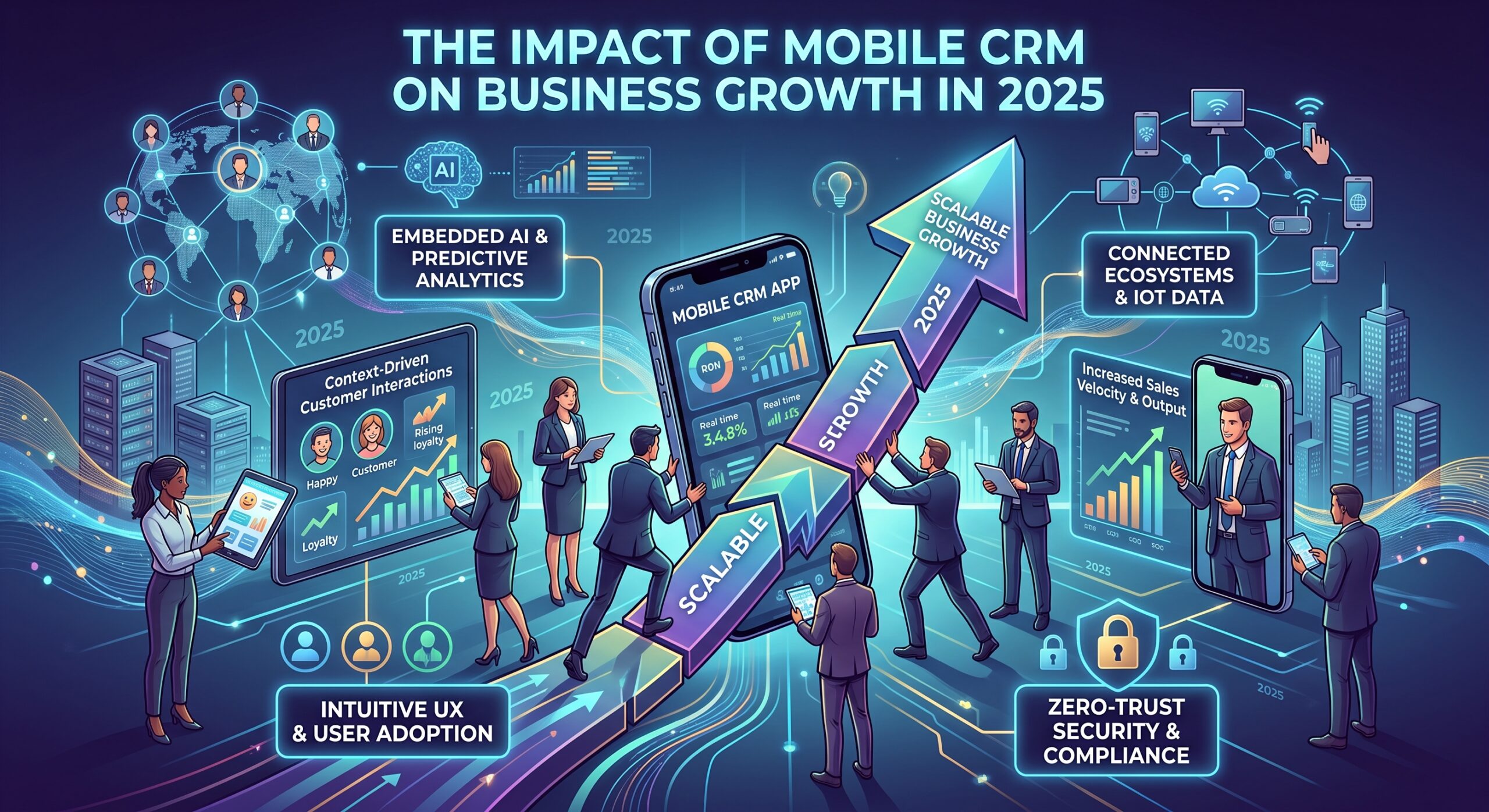
- Mobile-First Accessibility: With remote work firmly established, full-featured mobile CRM applications are mandatory. Field agents must be able to pull up client dossiers and update pipelines instantly from their smartphones.
- Hyper-Focus on Customer Experience (CX): The CRMs of 2025 will evolve past simple relationship management into holistic “Experience Platforms,” managing every single digital and physical touchpoint a consumer has with your brand.
The Bottom Line
Understanding and optimizing the ROI of your CRM software is paramount for sustainable growth. By fully committing to team training, deep customization, and breaking down internal data silos, your organization can turn a monthly software expense into one of its most profitable assets. As AI and mobile technologies continue to evolve in 2025, the businesses that actively adapt their CRM strategies will be the ones that dominate their respective markets.
Here is a comprehensive look at how to measure, understand, and dramatically maximize your CRM returns in the coming year.
The Fundamentals of CRM ROI
At its core, CRM ROI is a financial metric that compares the profit generated by your CRM system against the total cost of implementing and maintaining it.
Calculating this return is essential for modern businesses for three main reasons:
Cost Justification: It provides concrete financial proof that the software expenses are paying off.
Performance Tracking: It reveals whether your sales and customer service teams are actually adopting and benefiting from the platform.
Strategic Agility: Understanding these metrics allows leadership to make data-backed decisions regarding future marketing and sales initiatives.
The High-Value Benefits of a Optimized CRM
When fully leveraged, a robust CRM ecosystem delivers massive organizational benefits that directly impact the bottom line:
- Unprecedented Sales Velocity
By automating tedious administrative tasks and tracking sales pipelines in real-time, CRMs allow representatives to focus purely on closing deals. Data suggests that properly implemented CRM systems can drive a 29% increase in overall sales revenue through improved forecasting and streamlined workflows. - Marketing Automation and Conversion Spikes
Modern CRMs offer powerful audience segmentation capabilities. When you combine targeted data analytics with automated marketing campaigns, businesses can see lead conversion rates surge by up to 300%. Delivering the right message to the right person at the exact right time becomes effortless. - Deep-Level Customer Insights
Centralizing all client communications, purchase histories, and preferences into a single dashboard provides a holistic view of your audience. This enables highly personalized service, which drastically reduces customer churn and boosts lifetime value.
5 Actionable Strategies to Maximize Your Investment
To extract the highest possible ROI from your CRM in 2025, implement these proven strategies:
Prioritize Ongoing Training: A CRM is only as powerful as the people using it. Invest heavily in continuous onboarding and advanced training sessions to ensure your staff utilizes the platform to its absolute fullest potential.
Tailor the Architecture: Avoid out-of-the-box setups. Customize your CRM dashboards, automate your specific daily workflows, and integrate the third-party apps your business already relies on to create a frictionless environment.
Break Down Departmental Silos: Mandate that Marketing, Sales, and Customer Support all operate within the same CRM space. A unified data ecosystem ensures that a customer’s journey is smooth from the first marketing email to post-sale support.
Leverage Built-In Analytics: Don’t just collect data; act on it. Regularly schedule reviews of built-in reporting features to spot dropping conversion rates, identify top-performing sales reps, and adjust strategies dynamically.
Monitor Core KPIs Relentlessly: Keep a close eye on metrics like customer acquisition cost (CAC), retention rates, and average deal size to ensure the software continues to move the needle in the right direction.
Looking Ahead: 2025 CRM Trends to Watch
To stay ahead of the curve, businesses must adapt to the technological shifts reshaping CRM platforms:
Deep AI Integration: Artificial Intelligence is transforming CRMs from passive databases into active advisors. Expect predictive analytics that can automatically score leads and suggest the exact moment a client is ready to buy.
The IoT Connection: As the Internet of Things (IoT) expands, CRMs will begin pulling live, real-world data from connected devices, allowing companies to offer proactive support based on actual user behavior.
Mobile-First Accessibility: With remote work firmly established, full-featured mobile CRM applications are mandatory. Field agents must be able to pull up client dossiers and update pipelines instantly from their smartphones.
Hyper-Focus on Customer Experience (CX): The CRMs of 2025 will evolve past simple relationship management into holistic “Experience Platforms,” managing every single digital and physical touchpoint a consumer has with your brand.
The Bottom Line
Understanding and optimizing the ROI of your CRM software is paramount for sustainable growth. By fully committing to team training, deep customization, and breaking down internal data silos, your organization can turn a monthly software expense into one of its most profitable assets. As AI and mobile technologies continue to evolve in 2025, the businesses that actively adapt their CRM strategies will be the ones that dominate their respective markets.